

You may have to take French language proficiency tests for many reasons. It can vary from university admissions to immigrating to France, Quebec, Canada, or any other Francophone country.
TEF and TCF are two French exams that are beneficial for many purposes. These tests can help you get additional points for permanent residency in France and Canada.
But what are TCF and TEF? What is the difference between TEF Canada and TCF Canada? Which is more suitable for your goal, and how can you apply it?
In this blog, I will cover the different variants. Also includes the registration process, dates, exam centers, fees, test structure and format, results, eligibility, scores, validity, FAQs, and more.
Time to get started!
Table of Contents
Importance of TEF and TCF
French is a widely spoken, influential, and official language of over 25 countries.
The importance of the French language extends across domains. From personal to professional, and from cultural to academic, there are many good reasons to learn French.
Today, immigration is another primary motivator for learners worldwide. That is why many study French to boost their prospects of permanent residence in many developed nations.
Canada and France have become popular destinations for students and immigrants seeking to start new lives and secure a clear path to citizenship.
The Canadian government recently announced its immigration levels plan for 2024-2026. Under this plan, they plan to invite 1.5 million new immigrants between 2024 and 2026.
Canada has two official languages: French and English. Almost the entire population speaks one or both.
To get permanent residency in Canada, you must apply through one of many immigration programs. For example, the Express Entry Program (EEP), Provincial Nominee Programs (PNPs), or Quebec Skilled Worker Program (QSWP).
The requirements and eligibility differ for these programs. Yet, language tests are often essential.
If you have a good command of French as a second language, you can get a CLB 7 in TEF or TCF. As a result, you can earn up to 50 extra points.
In addition to IELTS and CELPIP, the Canadian government accepts TCF Canada and TEF Canada. If you plan to move to Quebec, you have two more options: TCF for Quebec and TEF Quebec.
What is TEF (Test d’évaluation du Français)?
The TEF (Test d’évaluation de Français) is a standardized French language exam. It measures French proficiency among non-native speakers.
The French Language Centre of the CCI (Chamber of Commerce and Industry) Paris Ile-de-France created the TEF test in 1998. The French Ministry of National Education has recognized this since 2004.
This test evaluates an individual’s French reading, speaking, writing, listening, and understanding skills.
Recognitions and Acceptance
Many governments and bodies recognize and accept TEF. This includes the French Ministry of Education, the Ministry of the Interior, and the Ministry of Higher Education, Research, and Innovation.
The Department of Immigration, Refugees and Citizenship of Canada and the Quebec Ministry of Immigration, Francisation and Integration accept. The Swiss State Secretariat for Migration also admits it.
Key Features of TEF
Let’s find out everything about the French TEF exam.
Sections
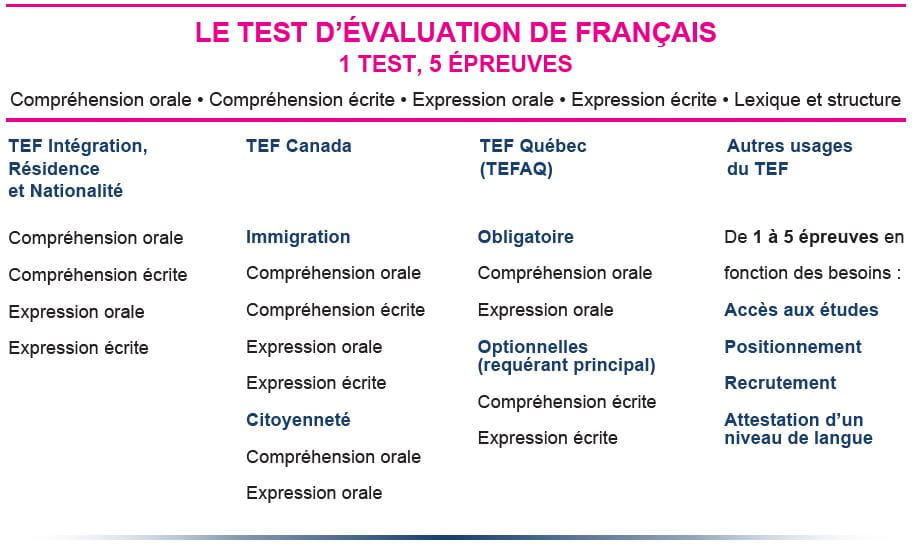
It comprises four main sections. Each assesses a different language skill.
- Compréhension Orale (Listening Comprehension)
- Compréhension Écrite (Reading Comprehension)
- Expression Orale (Speaking Expression)
- Expression Écrite (Writing Expression)
Levels
The test is structured into levels (A1 to C2) and follows the Common European Framework of Reference for Languages (CEFR) guidelines.
Each level aligns with a specific aptitude level. A1 is the beginner level, and C2 is the advanced, near-native level.
Scoring
You score each section of the TEF separately. Then you get an overall result by summing the individual scores. The scores are then mapped to the CEFR levels.
Purpose
The TEF is helpful for various goals, such as career opportunities in French and higher studies in French-speaking countries.
The Canadian and French governments accept TEF scores. Thus, it is valuable for immigration to Canada and France.
The TEF results contribute to the Comprehensive Ranking System (CRS) points for the Express Entry immigration system. It helps to apply under the Federal Skilled Worker Program and other immigration streams.
To apply for French nationality, you can appear for TCF or TEF IRN.
Validity
The results are valid for two years from the test.
Test Format
- Compréhension Orale (Listening Comprehension): The tasks involve listening to audio recordings, which include conversations, interviews, and lectures. Candidates answer questions based on the content.
- Compréhension Écrite (Reading Comprehension): Tasks involve reading and understanding written texts, such as articles, letters, and reports, and answering questions based on these texts.
- Expression Orale (Speaking Expression): Tasks involve taking part in spoken interactions and expressing opinions. They also include responding to the examiner’s prompts.
- Expression Écrite (Writing Expression): The tasks cover producing written texts, such as essays, letters, and summaries, to show writing skills.
TEF Test Versions
TEF offers four versions to meet diverse needs.
- TEF Other Purposes for study or work in France and Canada.
- TEF Canada for immigration to Canada.
- TEF IRN for French nationality and Residency Card.
- TEF for Québec Immigration.
Let’s dive into the individual test.

1. Test d’évaluation de français (TEF Other Purposes)
TEF for Other Purposes is for international students applying to higher study abroad programs in France and Canada. It is also helpful for work, job hiring, training, and internships.
It certifies your level of French mastery and helps decide your eligibility for these programs.
The grade is on a 7-level scale, ranging from level 0 (basic) to level 6 (advanced fluency). It links to CEFR levels (A1-C2) and the 12 levels of the Canadian Language Benchmarks.
They email the certificate within 5 to 6 weeks of taking the test. You can take the test as many times as you like, but there is a one-month waiting period between two consecutive tests.
The test comprises five modular tests. You can choose any or all of the five exams listed below per your goals and requirements. Remember that you have to complete this examination in a single session.
TEF Other Purposes exam structure
- Listening Comprehension: 40 min – 60 items
- Vocabulary & Structures: 30 min – 40 items
- Reading Comprehension: 60 min – 50 items
- Oral Expression: 15 min – 2 topics to complete
- Written Expression: 60 min – 2 topics to complete
2. TEF Canada
TEF Canada is a general international benchmark exam that evaluates your overall knowledge of French. It is for both non-native French speakers and Francophones.
This test is required for economic immigration programs that demand proof of language skills. TEF Canada is a key indicator of French-language proficiency required for Canadian citizenship.
This test also follows the same CEFR approaches as TEF Other Purposes.
It is proof of language ability by Citizenship and Immigration Canada (CIC) for permanent residence and Canadian citizenship applications. You require at least level 7 (B2 of the CEFR) to get bonus points.
The Canadian government also uses it for Provincial Nominee Programs (PNPs), the Start-Up Visa Program, and self-employed workers.
TEF Canada exam structure
The test comprises four modules: listening, speaking, reading, and writing.
The e-TEF is an online version that allows you to take the reading, writing, and listening modules on a computer at the designated test center. Because of infrastructure capacity constraints, the number of e-TEF seats is limited.
- Written comprehension (Reading): 60 minutes — 50 questions (300 points)
- Written expression (Writing): 60 minutes — 2 topics (450 points)
- Oral comprehension (Listening): 40 minutes — 60 questions (360 points)
- Oral expression (Speaking): 15 minutes per candidate — 2 subjects (450 points)
For immigration to Canada, all four sections above are required. The total duration is 2 hours and 55 minutes.
For Canadian citizenship, the following two sections are mandatory. It takes 55 minutes to cover both.
- Oral Expression (Speaking): (15 minutes per candidate) – 2 topics – 450 points
- Oral Comprehension (Listening): (40 minutes) – 60 questions – 360 points
3. TEF Quebec (TEFAQ)
Do you want to immigrate to Québec under the Quebec Skilled Worker (QSW) Program, the Quebec Experience Program (PEQ), or one of the many programs for businesspeople?
If that’s the case, consider taking the Test d’évaluation du français adapté pour le Québec (TEFAQ) to improve your overall score.
It is specially designed to check your speaking and listening skills.
Quebec’s Ministry of Immigration, Diversity, and Inclusion (MIDI) admits the TEFAQ as part of an official immigration application.
TEFaQ exam structure
The TEF Quebec consists of four sections. It primarily focuses on verbal communication, with the reading and writing portions optional.
Two obligatory tests (55 minutes)
- Oral comprehension (Listening): 40 minutes — 40 questions
- Oral expression (Speaking): 15 minutes — 2 topics
Two optional tests (120 minutes)
- Written comprehension (Reading): 60 minutes — 40 questions
- Written expression (Written): 60 minutes — 2 topics
The total test duration is 2 hours and 55 minutes. To assess French, you need a minimum of B2 level. You receive the results electronically.
Completing the oral comprehension and expression modules can earn up to 14 points. You can get two more points by completing the elective reading and writing papers.
You can earn up to 16 points, and your spouse can earn up to 6 points if they also take the speaking and listening sections.
After taking the exam, Le “Français des Affaires” will email you a secure link to access your results and scores within 2-4 weeks.
4. TEF IRN (Intégration, Résidence, & Nationalité)
The French Ministry for the Interior acknowledges TEF Integration, Residence, and Nationality. It is required for individuals applying for a residence permit or naturalization in France.
It evaluates oral/written comprehension and oral/written expression in French. It only measures language skills rather than understanding France’s history, culture, and society.
To validate the citizen course, you need at least A1 in all four sections: A2 for the resident card application and B1 for the nationality application.
TEF IRN exam structure
The TEF IRN has four mandatory exams: written comprehension, oral comprehension, written expression, and oral expression.
- Listening comprehension: computer-based group test – 20 MCQ – 15 minutes
- Reading comprehension: computer-based group test – 20 MCQs – 20 minutes
- Written expression: computer-based group test – 3 exercises – 30 minutes
- Oral expression: face-to-face with an examiner – 2 exercises – 10 minutes
The TEF IRN total test duration is 1 hour and 15 minutes. It checks your French level up to B1 on CEFR. They sent the results in a digital format within about 2 to 4 weeks.
What is TCF (Test de Connaissance du Français)

The Test de Connaissance du Français (TCF) is another French-language placement test for non-native speakers.
The Centre International manages the TCF d’études pédagogiques (CIEP) of the French Ministry of Education, which has accredited it.
Like TEF, it is widely recognized and accepted for various purposes, including employment, academic admissions, and immigration.
Anyone aged 16 and above can take the TCF Canada exam, regardless of nationality or mother tongue. The test certifies your proficiency in French for immigration to Canada, Quebec, and France.
The validity, scoring, test structure, benefits, and exam format are similar to TEF.
TCF Test Versions
TCF offers four versions to meet diverse needs.
- TCF Tout Public (TP)
- TCF IRN (Intégration, Résidence et Nationalité)
- TCF Canada
- TCF Québec Immigration (TEFAQ)
Let’s dive into the individual test.
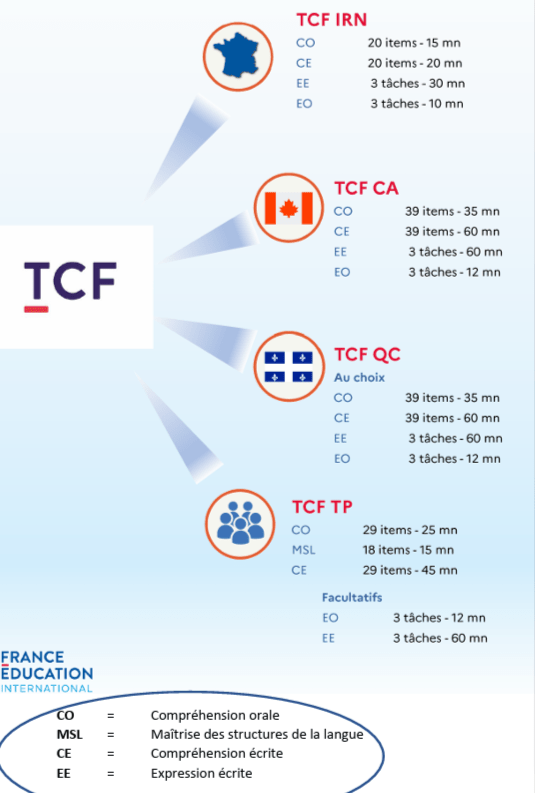
1. Le TCF tout public (TCF TP)
The TCF Tout Public (TP) is for general use and is suitable for a wide range of individuals and contexts. The certification supports personal, educational, and professional goals.
It assesses the French proficiency of non-native speakers across multiple levels, from beginner to advanced.
Like other versions of the TCF, this has four main sections:
- Compréhension Orale (Listening Comprehension)
- Compréhension Écrite (Reading Comprehension)
- Expression Orale (Speaking Expression)
- Expression Écrite (Writing Expression)
TCF Tout Public test format
This version includes three compulsory multiple-choice (MCQ) tests. There are two more optional tests. The candidate can decide whether to take it depending on their needs.
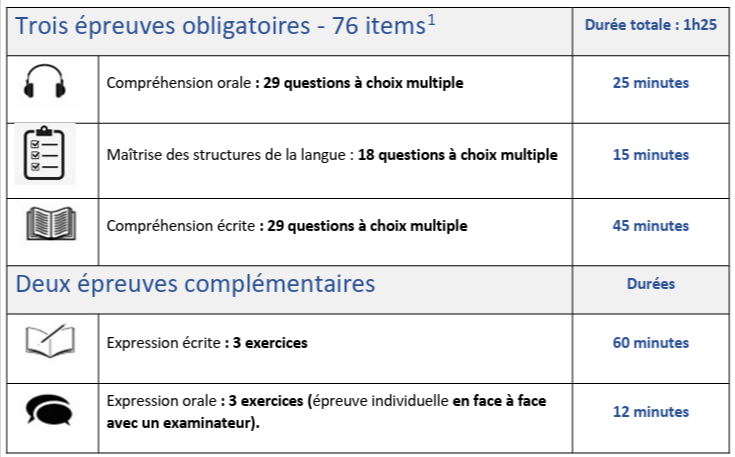
- Listening comprehension: Exam room test: 29 MCQ (25 minutes)
- Grammar comprehension: Exam room test: 18 MCQ (15 minutes)
- Reading comprehension: Exam room test: 29 MCQ (45 minutes)
- Written skills: Exam room test: 3 exercises (60 minutes)
- Verbal skills: Individual 1-to-1 with an examiner: 3 exercises (12 minutes)
The duration of the TCF Tout public depends on the number of tests. It can range from 1 hour and 25 minutes to 2 hours and 37 minutes.
2. TCF IRN (Integration, Residence and Nationality)
The TCF IRN is intended for all foreign nationals aged 16 or older who wish to confirm their level of French.
It is helpful if you intend to apply for French nationality and a long-term residence permit. It can also validate the A1 level as part of the OFII citizenship process.
TCF IRN test format
The TCF IRN comprises four mandatory tests that assess general French language skills. It assesses only linguistic skills, not familiarity with French history, customs, culture, or society.
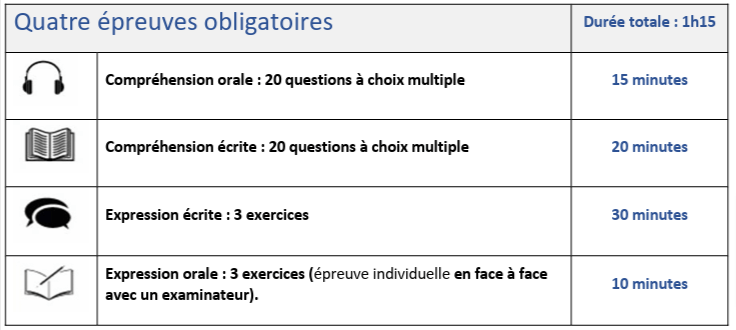
- Listening comprehension: Exam room test: 20 MCQ (15 minutes)
- Reading comprehension: Exam room test: 20 MCQ (20 minutes)
- Written skills: Exam room test: 3 exercises (30 minutes)
- Verbal skills: 1-to-1 with an examiner: 3 exercises (10 minutes)
The entire duration of the TCF IRN test is 75 minutes.
3. TCF Canada
Of the five variants, TCF Canada meets the criteria set by Immigration, Refugees and Citizenship Canada (IRCC).
They accept both TEF Canada and TCF Canada results for economic immigration or for gaining Canadian citizenship.
IRCC has accredited TCF Canada. Starting 1 May 2022, the Ministry of Inclusion, Francization, and Immigration (MIFI) will also accept it as part of an immigration application in the province of Québec.
TCF Canada test format
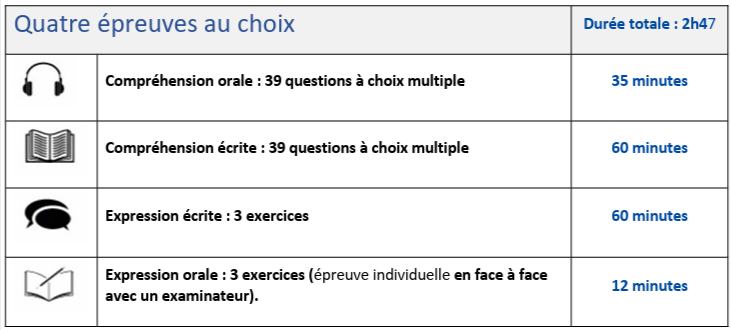
The TCF Canada exam comprises 78 items covering listening and reading comprehension. All questions are multiple-choice; candidates must select one correct answer from four options.
It also has four mandatory sections: listening, reading, speaking, and writing. The TCF Canada lasts 2 hours and 47 minutes. Check our online TCF preparation course.
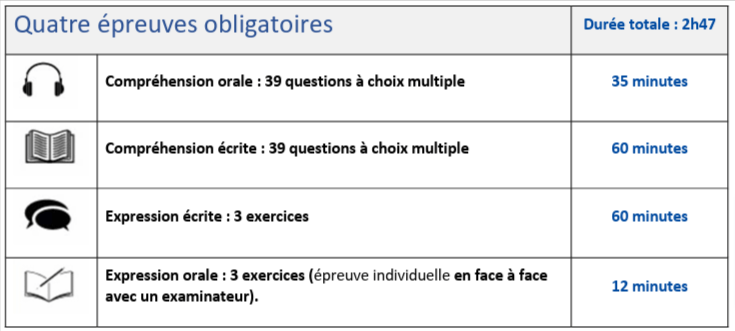
- Listening comprehension — (39 items — 35 minutes), All MCQs
- Reading comprehension (39 items — 60 minutes) — All MCQs
- Written expression (60 minutes — 3 Tasks)
- Oral expression (12 minutes — 3 Tasks)
4. TCF for Quebec (TCFQ)
TCF for Quebec is a French proficiency test approved by Quebec’s Ministry for Immigration, Diversity, and Inclusion (MIDI) standards.
Once you receive the score, you can include the certification in your application. It is only valid for your immigration application.
The “TCF for Quebec” comprises two compulsory and two optional exams. It assesses proficiency in standard French in writing, listening, reading, and speaking.
TCF for Quebec exam structure
TCFQ has only two compulsory modules — speaking and listening.
As a principal applicant, you can gain 14 out of 16 points by getting the maximum points in these two components.
- Listening comprehension (29 questions) — Duration: 25 minutes.
- Oral expression (speaking) (3 questions) — Duration: 12 minutes, including 2 minutes of preparation.
In the listening test, all questions would be MCQs with four choices and one correct answer. Speaking is an individual face-to-face test with an examiner.
You can earn two extra points by taking the optional written (3 Tasks – 60 minutes) and reading (29 MCQs – 45 minutes) segments.
There are no limits on how many times you can give to TCF Québec. However, regardless of the results, you must wait 30 days between the two tests.
Frequently Asked Questions about TCF and TEF
I have compiled a list of the most commonly asked questions about these French exams.
What is the validity period of TEF and TCF?
The validity period for all TEF and TCF results variants is two (2) years from the date of test result announcements.
How does TEF Canada differ from TCF Canada?
There’s not much difference between TEF and TCF Canada. The difficulty level is the same for both, and the Canadian government accepts them equally.
The primary differences are the test format, number of questions, time limit, test centers, and fees.
Which is easier, TEF or TCF?
Both are similar in terms of language complexity. Having at least a DELF B2 level helps achieve the highest points.
Both exams are international and adhere to the official language guidelines. As a result, one should use standard French instead of the various French language varieties.
Are TEF Canada or TCF Canada difficult or easy to pass?
It’s easy if you already have a strong understanding of French from B1 to C2.
What if you have no prior knowledge or only studied it as an elective subject in school or college? It will take time to get ready for either test in that case.
Practicing random books or French language education apps alone won’t cut it.
Finding an experienced French teacher can improve your learning experience. You can enroll in a French course, either offline or online, at a reputable learning center.
What are the eligibility criteria?
Non-native French speakers aged 16 and older can take the TEF and TCF exams. Of course, you will also require a higher level of French proficiency.
What is the registration process?
Accredited centers conduct these examinations globally throughout the year. To sign up for any of these four tests, locate a nearby testing center and select a date.
Next, complete the form, choose the location, and pay the fee.
During registration, you may be required to submit a photocopy of your official ID (e.g., a driver’s license or passport), a photo, and your signature. Plus, ensure you carry the same ID proof to the test center.
Register as early as possible, as seats may fill quickly because of limited availability.
How much time is needed to get TCF and TEF Canada results?
Candidates can expect to receive an official certificate of results by mail. Usually, it takes 4 to 6 weeks after the exam. You’ll receive a detailed, personalized remark.
The document will display your scores for each module and level. It thoroughly explains your French competency.
What are the exam fees for the TEF and TCF Canada?
The TEF, TCF, TEFAQ, and TCFQ registration fees vary by test center and country.
For instance, it can vary from $300 to $400 in the USA. In India, the price ranges from ₹ 12,000 to ₹ 25,000, depending on the number of papers you intend to take.
After a successful registration, all fees are typically non-refundable. If the exam gets canceled, they will refund your money.
How many times can I take these tests?
There is no limit to the number of times you can take the test.
There are no restrictions. Yet, there must be a two-month interval between two consecutive exams.
How many extra points can you earn because of French?
To receive an extra 50 points, you must score CLB 7 / NCLC 7 or higher in all four French language skills (reading, writing, speaking, and listening). CLB 5 or higher on all four English skills is also essential.
Getting a CLB 4 or lower in English (or not taking an English test) and a CLB 7 in French in all four sections earns you an additional 25 points.
How long does it take to prepare for TEF or TCF?
There’s no definitive answer.
To earn 50 extra points for Canada and 16 points for Quebec, you must achieve a CLB7 or higher score. It’s equal to the upper tier of DELF B2. It takes beginners around 600 to 800 hours of study to reach this level. It would require almost two years.
The duration depends on how you learn languages.
TEF Canada French course from a language school like LanguageNext or an experienced teacher can make the journey easier and faster.
Can I complete it within 3-6 months?
No. Exceptions are always there, but they aren’t examples. Putting in the effort, consistent practice, and proper guidance can lead to success within 12-18 months.
What is the best way to prepare for TCF and TEF Canada?
Finding a teacher or enrolling in an online French course nearby would be better, as exam preparation takes time.
Books, audio, and video lessons can also help improve your learning process.
How do TEF/TCF and DELF/DALF differ?
The fundamental distinction between these two exams is that the first is a single test. It shows your total points for French efficiency.
Select one of these levels: A1, A2, B1, B2 (DELF), and C1, C2 (DALF). Upon passing the test, you will receive the marks & diploma at that level. The goal is another crucial difference.
DELF and DALF serve diverse purposes, including education in France and French-related jobs.
The Canadian and Quebec TCF and TEF tests are solely for those seeking immigration to Canada/Quebec.
DELF/DALF is valid for life, unlike TEF and TCF, which are only valid for two years.
Should I take the TCF or TEF if I already have a DELF or DALF certification?
Yes. For economic immigration applications and Canadian citizenship, IRCC recognizes only TCF Canada and TEF Canada certifications.
Quebec offers two additional options: TEFAQ and TCFQ, in addition to DELF, DALF, TEF, TCF, and TEF Canada.
Is it possible to pass or fail?
These exams are foolproof and have no pass/fail criteria. You receive a level and score on a scale from A1 to C2, without passing or failing.
The scores will decide your bonus points for Canada or Quebec.
What French proficiency level is needed for TEF?
To meet the minimum requirement, you must reach level 7 of the NCLC (Canadian Language Benchmarks), the same as DELF B2.
Is online TEF available?
No. An e-TEF online version assesses your reading, listening, and writing skills through computer tests. Only authorized test centers allow you to appear for these exams.
When are the test dates for TCF and TEF Canada?
Unlike other language proficiency tests, the schedules for the TEF and TCF differ. The registration and test dates are based on the testing centers.
Although they usually announce the dates early, that is not always the case. It’s recommended that you contact the nearest center.
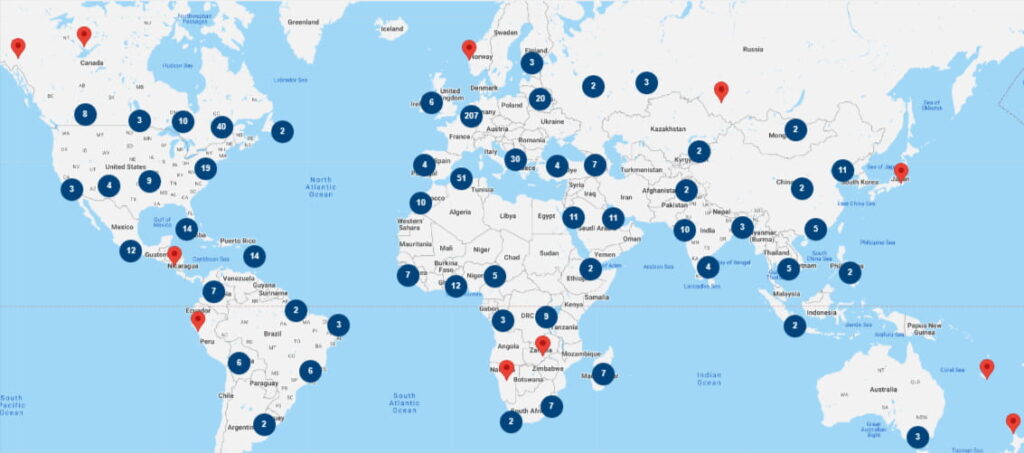
Where can I find the TEF Canada and TCF Canada tests?
CCI Paris Île-de-France, CIEP, L’Alliance Française, and other institutions collaborate to manage TEF and TCF tests. They are conducted at approved test centers year-round.
To check the list of sanctioned examination centers, visit the official websites of CCI and CIEP.
Where can I take the TEF, TCF, TEFAQ, and TCFQ exams in India?
L’Alliance Française network assists in the TEF and TCF tests in India. Contact the AF centers nearby to confirm upcoming dates.
Some known test centers in India are Bhopal, Bangalore, Chandigarh, Chennai, Kolkata, Mumbai, New Delhi, and Lucknow.
They keep changing the centers. Please contact AF for the latest updates.
Here are the 2026 TEF and TCF testing centers in India.
→ TCF Canada — Kolkata, Bangalore, and Delhi.
→ TCF QUÉBEC – Bangalore and Kolkata.
→ TCF TOUT PUBLIC — Bhopal and Kolkata
→ TEF QUÉBEC — Bhopal, Chennai, Lucknow, and Mumbai
→ TEF ANP — Kolkata
→ TEF Canada — Ahmedabad, Bhopal, Chandigarh, Chennai, Hyderabad, Lucknow, and Mumbai.
What happens if your score falls short of bonus points?
After a few months of preparation, you can try again. Whether you decide to make Canada your home, mastering French can be valuable in various ways.
There are limitless options, including jobs in Europe and North Africa, as well as countless career paths.
Where can you find sample test papers?
Visit the official TEF and TCF websites to access various sample papers. Additionally, you may use DELF B2-level books.
Do you plan to learn French to take one of these exams? If so, explore a variety of online and offline options by the best French language institute in Noida.
Let me know in the comments below if you have any questions about the TCF, TEF Canada, and Quebec tests.